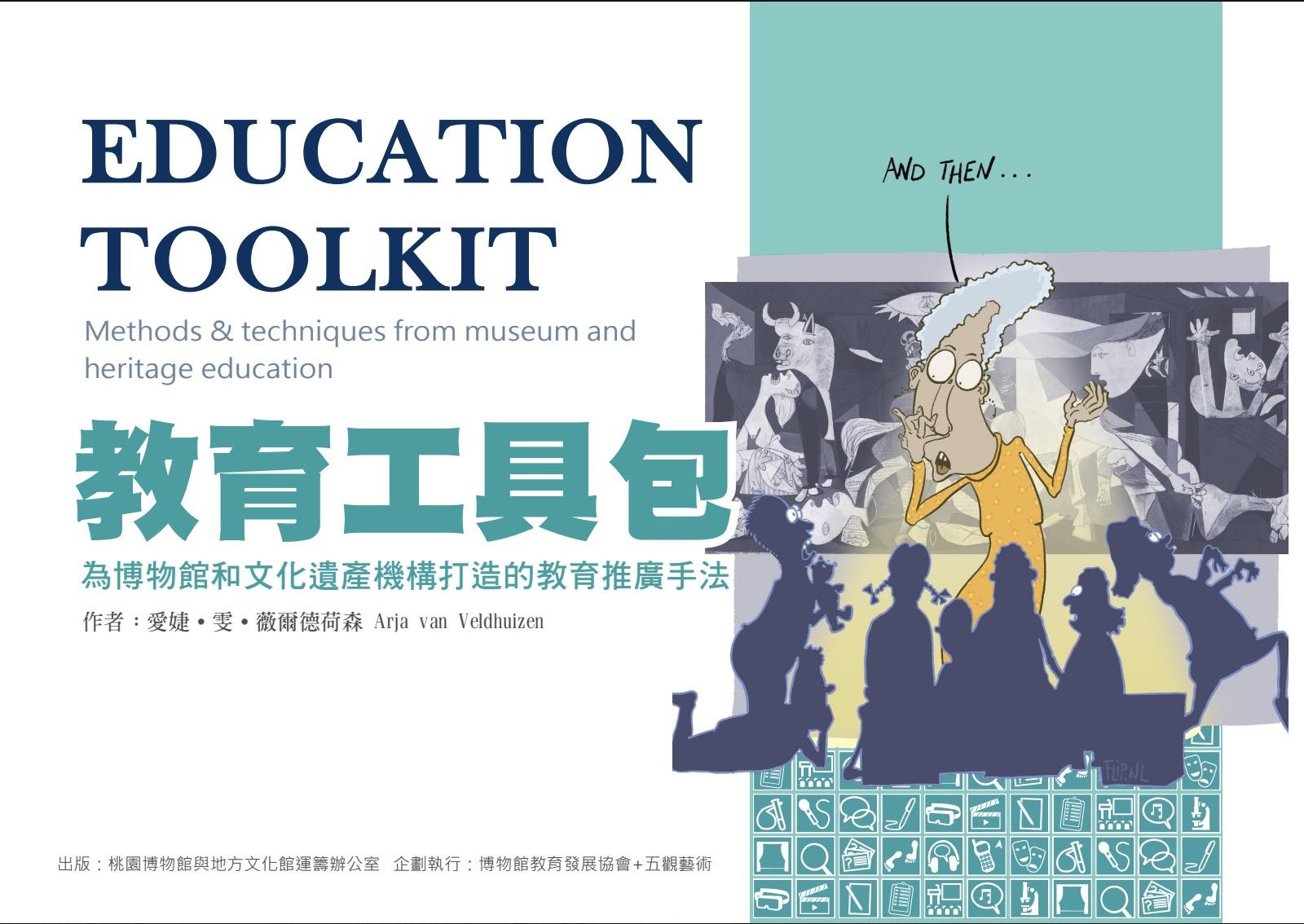
Education Toolkit: 18 Educational Outreach Methods for Museums and Cultural Heritage
By|MeDA (Museum Education Development Association)
In the preface, author Arja van Veldhuizen explains the motivation behind this manual. Museum educators worldwide are actively dedicated to their profession, utilizing various pedagogical methods to promote museums. While most people have heard of guided tours and scavenger hunts, there is so much more that can be planned! For educators working in museums or cultural heritage institutions, or those emerging in the field, this toolkit will be an invaluable resource. It contains a diverse range of outreach methods and practical experiences that can be put to use immediately whenever needed.
While teaching students at the Reinwardt Academy in the Netherlands, I needed to collect a wide variety of educational outreach methods. I searched through various publications, finding countless documents on guided tours but very few on other museum outreach methods. It seems museum educators are doers rather than writers...
That is why I compiled this educational toolkit and wish to share it with my colleagues. This manual describes 18 methods in random order; these methods partially overlap and are often used in combination. I describe them like cooking plans or menus, inspired by the recipe cards at my local supermarket.
As you prepare each "recipe"—whether the approach is grand or modest, meticulous or compromised, or utilizing methods I haven't even considered—the possibilities are endless. Every museum educator has their own personal style and approach, so feel free to use this manual as you wish!
Structure In the first paragraph of each outreach method, I explain how it can be used. This is an essential element in the development process of a new educational plan and a way to achieve outreach goals. Next, I describe the characteristics of each method to help us choose and arrange appropriate pedagogical techniques. Finally, the "recipe card" describing each method is presented. This toolkit is not exhaustive; there are certainly more worthy methods out there, and I welcome effective methods and case studies. Good luck! I hope you enjoy trying these methods in your own work!